
The full article content is sourced from the English guide markdown modules and rendered as real guide content.
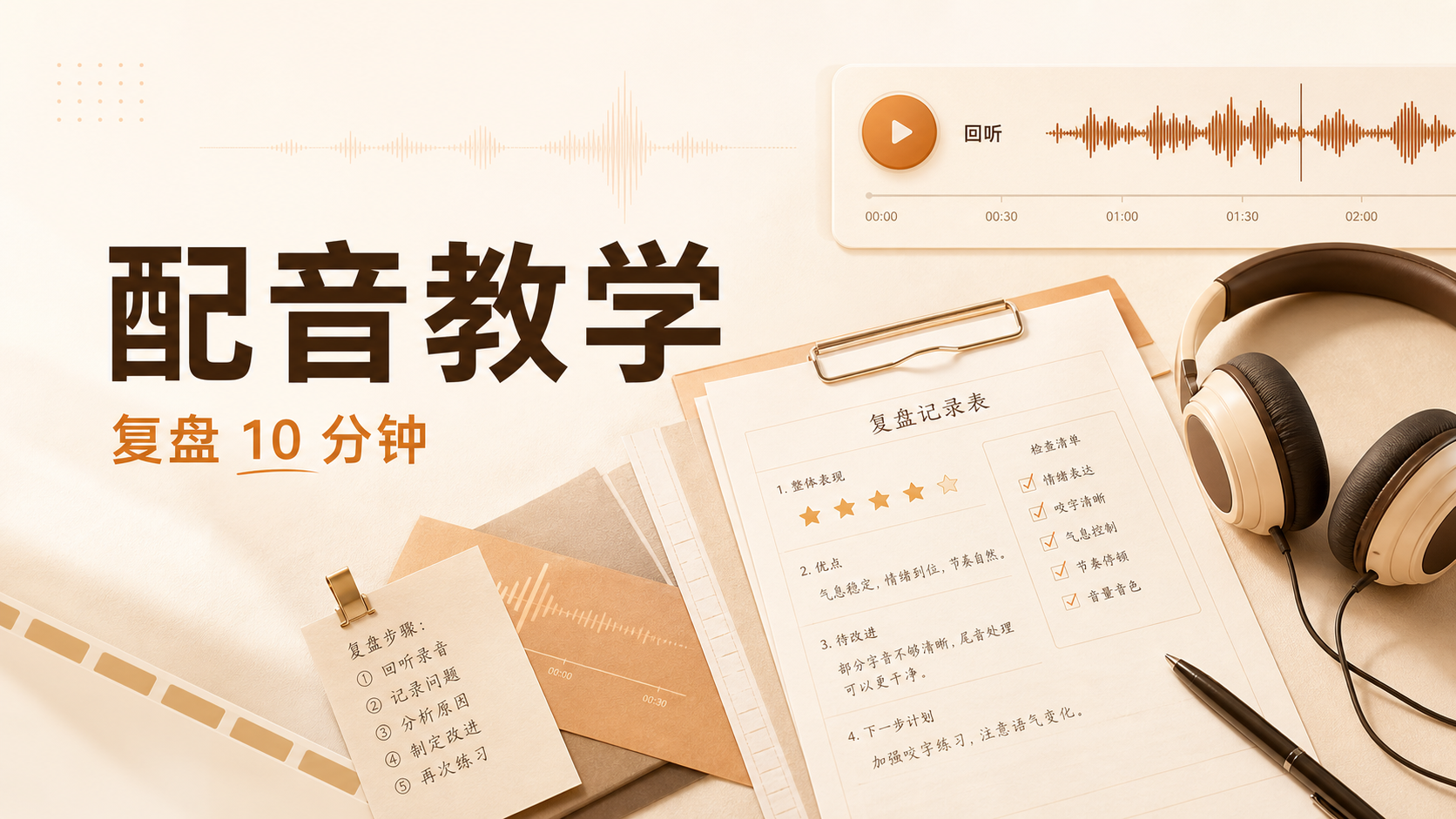
Article 6: How do you review after recording? A 10-minute workflow for beginners
Beginners often finish a recording session and only think, “That was okay.” That feeling is not very useful. What matters more is whether you can identify one or two clear things to improve next time.
A good review process does not need to be long. Ten focused minutes is enough if you know what to listen for.
The 10-minute review workflow
Minute 1: listen once without stopping
Play the take through from start to finish. Do not pause to fix things yet. Just hear the overall shape.
Ask yourself:
- Does the line move naturally?
- Did the energy stay stable?
- Is anything obviously broken?
The first listen is for the big picture.
Minutes 2-4: mark the problems
On the second pass, mark only the most important problems:
- A word that got swallowed
- A rhythm that rushed
- A place where the emotion felt off
- A breath that interrupted the meaning
Do not mark every small imperfection. Beginners improve faster when the feedback is focused.
Minutes 5-6: choose one thing to fix
Pick one target only. For example:
- Clearer consonants
- Slower pacing
- Cleaner pause placement
- Less throat tension
If you try to fix everything, you will not know what actually helped.
Minutes 7-8: re-record with one change
Record the same line again, but change only the one thing you picked. Keep everything else as close as possible.
This is where improvement becomes measurable. A second take only works as a learning tool if you isolate the change.
Minutes 9-10: write down the result
Take one minute to note:
- What problem you found
- What you changed
- Whether the second take improved
- What to try next time
That record is more useful than relying on memory.
What beginners should track every day
Use a tiny log:
| Item | What to write |
|---|---|
| Recording length | How long you practiced |
| Main problem | The one biggest issue |
| Main fix | The one thing you changed |
| Result | Better, worse, or unchanged |
This keeps the review process simple and repeatable.
Common review mistakes
Beginners often do one of these:
- They listen only for whether the take “feels good”
- They try to fix ten things at once
- They compare themselves to a finished actor instead of the previous take
- They do not write anything down
Each of those habits makes progress harder to see.
The goal is not perfection
Review is not about judging yourself. It is about making the next session better than the last one.
If you can leave each recording block with one clear note, one clear adjustment, and one clear next step, your practice will improve quickly and steadily. That is the real value of review.