
The full article content is sourced from the English guide markdown modules and rendered as real guide content.
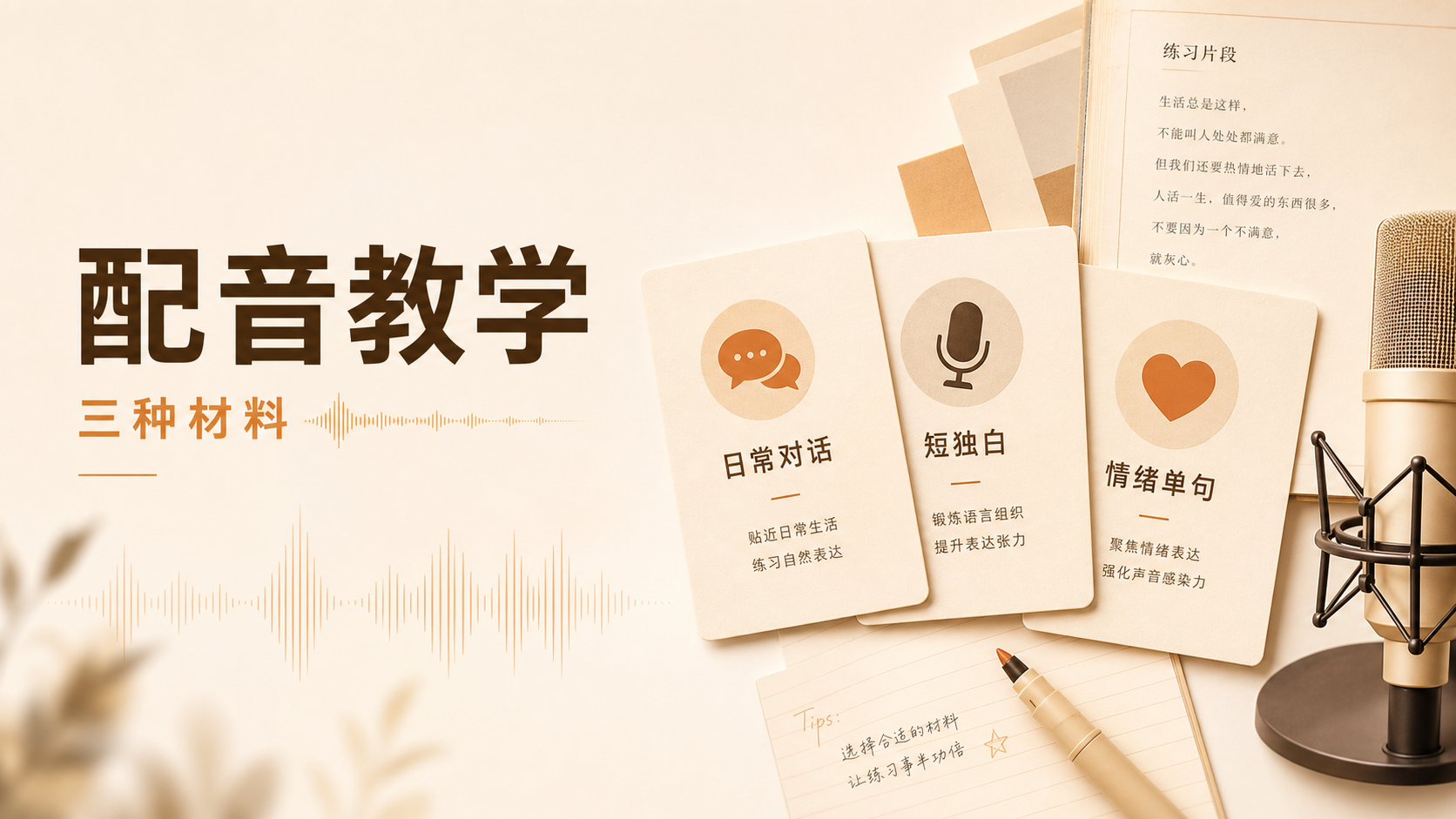
Article 4: How do you choose practice text? Start with these three types
Beginners often think practice text should be impressive, dramatic, or “professional”. In reality, the best practice material is usually the material you can repeat, compare, and learn from.
The right script should give you clear feedback. If the text is too long, too fancy, or too emotionally extreme, you will spend all your energy surviving the line instead of learning from it.
Start with three material types
1. Everyday dialogue
This is the easiest starting point. Casual back-and-forth lines help you practice natural timing, turn-taking, and conversational rhythm.
Good dialogue should:
- Sound like people actually talking
- Include short, clean sentences
- Contain clear emotional shifts
- Be short enough to repeat multiple times
If you can make a simple conversation feel alive, you are building a strong base.
2. Short monologues
Short monologues help you practice sustained thought, because there is no back-and-forth to hide behind.
Choose passages that:
- Stay within a manageable length
- Have one clear speaking purpose
- Include one emotional turn or realization
- Let you work on breath and phrasing
This type of text is very useful for learning how to hold attention without rushing.
3. Emotional one-liners
A single line with a strong emotional point is useful because it lets you isolate expression.
For example, one line can help you practice:
- Surprise
- Relief
- Regret
- Conflict
- Quiet determination
Keep the line short. The goal is not to make a huge scene. The goal is to study one emotional choice at a time.
What to avoid at the beginning
Some texts create more noise than progress for beginners.
Avoid, or at least delay, these kinds of material:
- Very long speeches
- Dense technical vocabulary
- Scripts with too many names or references
- Extreme shouting or crying scenes
- Dialogue that only makes sense with lots of context
These are not bad scripts. They are just poor first-step practice material.
A simple selection checklist
Use this list when you are choosing a script:
| Question | Good sign | Warning sign |
|---|---|---|
| Can I finish it in one sitting? | Yes | No |
| Can I repeat it several times? | Yes | No |
| Does it contain one clear focus? | Yes | Too many things at once |
| Can I hear improvement after a second take? | Yes | It stays chaotic |
If the answer is mostly “yes”, the text is probably useful.
How to use one script well
The value is not in collecting hundreds of scripts. The value is in using a few scripts deeply.
Take one piece and use it to practice three things:
- Read it for meaning
- Read it for rhythm
- Read it for emotional control
Then return to the same script a few days later and compare. Repetition is what makes progress visible.
A good practice script feels workable, not impressive
If a script makes you feel clever but gives you no clear feedback, it is probably not a great practice text. A good practice piece is one you can understand, repeat, and refine.
For beginners, that is more useful than chasing a “hard” script too early.